
NUMBNESS & TINGLING
Numbness means you have less feeling in part of your body, it can feel like a hair or a bug on your skin, mild pins and needles, vibration or cotton wool rubbing across an area of your skin,
Tingling may feel like stronger pins and needles, buzzing, burning, crawling, or a small electric shock.
Sometimes your arm or leg simply “falls asleep” because you sat in on the couch too long or you slept in one position too long. The feeling should improve quickly after you move around.
When numbness or tingling keeps returning, lasts a long time, spreads, or comes with weakness, it may mean a nerve is being irritated, squeezed, or damaged. Some diseases like diabetes are associated with nerve tingling or numbness.
Other causes are vitamin problems, certain medications, injuries, and other health conditions.
Is Your Hand “Asleep,” or Is a Nerve Asking for Help?
A hand or foot may tingle after you sit, sleep, or lean on it the wrong way. This happens when pressure is placed on a nerve or its blood supply.
Once you change positions, the feeling should begin to fade.
It deserves a closer look when the tingling:
Keeps returning
Lasts after you change positions
Wakes you at night
Spreads into the arm or leg
Comes with pain, weakness, or loss of grip
Your body may be giving you an early warning. This is when you should take action and "get checked". At AFC AZ our Alpha 5 Phase System is built on finding out why you are having the symptom, in this case numbness or tingling and then addressing the cause.
Why Do My Hands Keep Going Numb?
Hand numbness often happens when a nerve is squeezed or irritated somewhere along its path.
The pressure may be near the:
Neck
Shoulder
Elbow
Forearm
Wrist
Carpal tunnel is one possible cause, but it is not the only one. Carpal tunnel usually affects the thumb, index finger, middle finger, and part of the ring finger.
Tingling in the little finger may involve a different nerve.
The location of the numbness gives us clues. That is why treating only the hand may miss where the problem begins. Defining where the numbness is coming from should include x-rays, and sometimes a MRI, and in certain cases, will also require lab work. If you are ready to start diagnosing your numbness and tingling, then
Why Are My Feet Tingling, Burning, or Going Numb?
Tingling in the feet may come from pressure on a nerve in the back, hip, leg, ankle, or foot.
It may also be caused by a problem that affects nerves throughout the body.
Possible causes include:
Diabetes or high blood sugar
Vitamin deficiencies
Certain medications
Poor blood flow
Nerve damage
Injuries
Pressure on a nerve
Do not ignore numb feet. When you lose feeling, you may not notice a cut, blister, burn, or sore. This is especially important for people with diabetes.
Can My Neck or Back Cause Numbness and Tingling?
Yes. Nerves leave the spinal cord and travel into your arms, hands, legs, and feet.
If a nerve becomes irritated or squeezed, you may feel symptoms somewhere along that nerve’s path. You may notice:
Tingling
Numbness
Burning
Shooting pain
Weakness
A heavy feeling in the arm or leg
The place where you feel the symptom may not be the place where the problem begins.
Chiropractic care may be appropriate when symptoms are connected to joint, movement, or nerve-pressure problems. Other causes may require medical testing or treatment.
When Is Numbness or Tingling an Emergency?
Call 911 when numbness begins suddenly, especially when it comes with:
Weakness or paralysis
Facial drooping
Trouble speaking
Confusion
Severe dizziness
A sudden, severe headache
Loss of balance or trouble walking
These may be warning signs of a stroke or another serious condition.
Seek prompt medical care when numbness follows a head, neck, or back injury or comes with loss of bladder or bowel control.
Schedule an evaluation when numbness keeps returning, spreads, affects both sides of the body, causes weakness, or does not improve.
afc az's alpha 5 phase system and the body fix assessment
At Active Family Chiropractic AZ, we do not assume every tingling hand is carpal tunnel or every numb foot comes from the low back.
We ask:
Where do you feel it?
Which fingers or toes are involved?
What movements make it better or worse?
Does it wake you at night?
Is there pain, weakness, or loss of grip?
Did it begin after an injury?
Could a medical condition or medication be involved?
Numbness and tingling are symptoms, not a complete diagnosis.
Your nerves are your body’s communication system sending signals from your body's management system, the brain.
When that system begins sending strange messages, it is time to find out why. In our office we have a short, no pressure visit called The Body Fix Assessment. It is short and sweet and designed to help you pick a direction: chiropractic or not.
We also offer a full New Patient Day 1 and Day 2 appointment. This is for you if you are done waiting for your body to heal on its own and you want to do everything you can to help it heal faster. This appointment may or may not lead you to the Alpha 5 Phase System, that depends on what we find and what your goals are .
You can SCHEDULE YOUR FIRST VISIT HERE: either The Body Fix Assessment or the New Patient Day 1 & 2.
remember
no one is coming because the hero you need is already inside you.
QUICK LINKS
office hours
Mon: 7:00 AM - 2:00 PM
Tue: 2:30 PM - 6:00 PM
Wed: 7:00 AM - 2:00 PM
Thu: 7:00 AM - 2:00 PM
Sat: Appointment only
Sun: Closed
129 S Smith Road #101 Tempe, AZ 85288
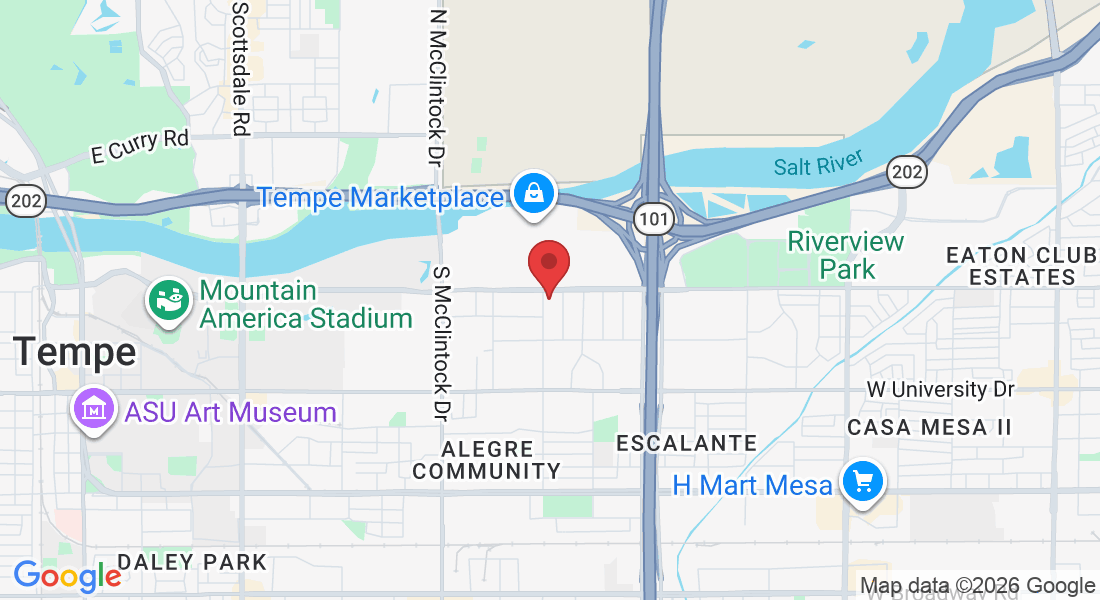
Just south of Tempe Marketplace
at the Junction of the 101 & 202 Freeways

© Copyright 2026 All Rights Reserved.
Last Updated: [DATE]


