
TENDONITIS
Tendons connect your muscles to your bones. This allows the elastic muscle to be tethered to the bone it needs to move. Tendons are the wires that let your body move fluidly. However, like real wires, they can degrade and get damaged if they’re overused, or traumatized.
Inflammation, pain and even tearing of the tendons themselves can happen if you overuse them. This is called Tendonitis and it can be a problem for many individuals, especially when it happens on multiple points in your body at the same time.
The name of your tendinitis is named after the place where it occurs. For example, Achilles Tendinitis is for the heels, rotator cuff tendinitis happens in your shoulders, and flexor tendonitis happens on your hand, just before the wrist.
Acute injuries, such as sprains, dislocations, or fractures, can cause tendonitis.
A poor ergonomic set up at work can contribute. Poor posture can lead to tendonitis. Variations in muscles or bones can contribute to tendonitis.
Overuse or repetitive or excessive exercise, such as running, jumping, or throwing, can lead to tendonitis.
Aging tendons lose elasticity as people age, making you more prone to tendonitis.
Some medical conditions, such as diabetes or rheumatoid arthritis, can increase the risk of tendonitis.
Certain medications, such as fluoroquinolines, corticosteroids, and aromatase inhibitors, can increase the risk of tendonitis.
Smoking can slow the delivery of nutrients to joints, which can contribute to tendonitis.
What if your tendonitis is not really “inflammation” anymore?
Many people use the word tendonitis for any tendon pain, but long-term tendon problems are often better described as tendinopathy.
That means the tendon is irritated, overloaded, and not tolerating stress well.
The goal is not just to ice it and hope. The goal is to figure out why the tendon keeps getting angry. That requires some "due diligence", not just a complete history but also an exam that includes functional movements, like our "The Body Fix Assessment" to assess which movements and final positions are the most problematic. And, yes, then X-rays. You deserve to have "All Of The Information" before moving forward with any treatment from any practitioner.
Why does tendon pain keep coming back every time you “rest it”?
Rest may calm symptoms, but it does not rebuild your work capacity.
If the tendon is weak, overloaded, poorly supported, or stuck in bad movement patterns, the pain often returns as soon as normal life returns. Rest can help quiet the fire, but it usually does not fix the wiring problem.
So obviously we need to fix the wiring: the wiring is the nervous system and requires getting adjusted. But we also need to address your diet and supplements to ensure all of the necessary nutrition is being added to "the system".
Can tendonitis heal without injections or surgery?
Many tendon problems can improve with conservative care. That may include activity modification, soft tissue work, mobility, progressive strengthening, better mechanics, and a smarter return-to-activity plan.
The key is loading the tendon correctly, not avoiding movement forever.
What everyday habits are making your tendon pain worse?
Repetitive gripping, poor posture, weak support muscles, bad lifting habits, sudden increases in activity (especially as we get older), poor recovery, and doing the same motion over and over can all keep a tendon irritated.
It is rarely one dramatic moment. Usually, it is death by a thousand tiny repeats.
When should tendon pain stop being ignored?
If the pain is getting worse, lasting more than a few weeks, affecting work or sleep, causing weakness, changing how you move, or returning every time you try to be active, it is time to get it checked.
Tendons respond best when we catch the problem quickly.
what you can do to prevent and treat tendinitis
Rest: Avoid activities that increase pain or swelling, and try not to work or play through the pain. You can try swimming or water exercises that don't stress the injured tendon.
Ice: Apply ice to the injured area for up to 20 minutes several times a day. You can use an ice pack, ice massage, or a slush bath.
Compression: Wrap the area with an elastic bandage or soft brace to reduce swelling. The wrap should be snug but not tight.
Elevation: If the tendinitis affects your knee, raise your leg above your heart. Pain relievers Take over-the-counter pain relievers like aspirin, naproxen, or ibuprofen.
Gentle exercises Once you can move the injured area without pain, try to keep moving it to prevent stiffness. You can also try rehabilitation exercises to regain full movement. Moving around the pool is super helpful.
Supplements: Consider taking omega-3 fatty acids, collagen, vitamin D, bromelain, or zinc.
Ergonomics: If your tendinitis is caused by repetitive computer work, try using an ergonomic chair and workstation with a split keyboard. Take regular and consistent breaks. Change positions if possible during your workday.
To Prevent Tendonitis:
Warm up and stretch before physical activity.
Take frequent breaks from repetitive exercises.
Stop activities that cause pain.
Use padding, gloves, or grip tape.
how would afc az's "the alpha 5 phase system" help you
Tendonitis is rarely fixed by resting it, icing it, and pretending you are “taking it easy” while still doing the same things that caused it. Tendon pain usually means the tissue has lost its "tolerance" which just means it cannot handle the load, repetition, position, or movement pattern you are currently placing on it. The tissue just can not keep up with the amount of stress it is sustaining.
That is why The Alpha 5 Phase System can be such a good fit.
Tendon care needs a plan, not random stretches.
First, we work to Relieve irritation.
Then we Realign the mechanics around the tendon, so the area is not constantly being overloaded.
Next, we Rebuild strength and tissue capacity. This is so important if you want to keep loading it in the same fashion you have been.
Then we Retrain better movement patterns and daily habits.
Finally, we help you Reclaim normal function so the pain does not keep coming back every time life gets busy.
The goal is to help it tolerate Your Real Life (and everything that goes with it) again and continue on to all of the Adventures yet to be had :)
If you still have reservations about going to the Chiropractor, consider our
The Body Fix Assessment.
QUICK LINKS
office hours
Mon: 7:00 AM - 2:00 PM
Tue: 2:30 PM - 6:00 PM
Wed: 7:00 AM - 2:00 PM
Thu: 7:00 AM - 2:00 PM
Sat: Appointment only
Sun: Closed
129 S Smith Road #101 Tempe, AZ 85288
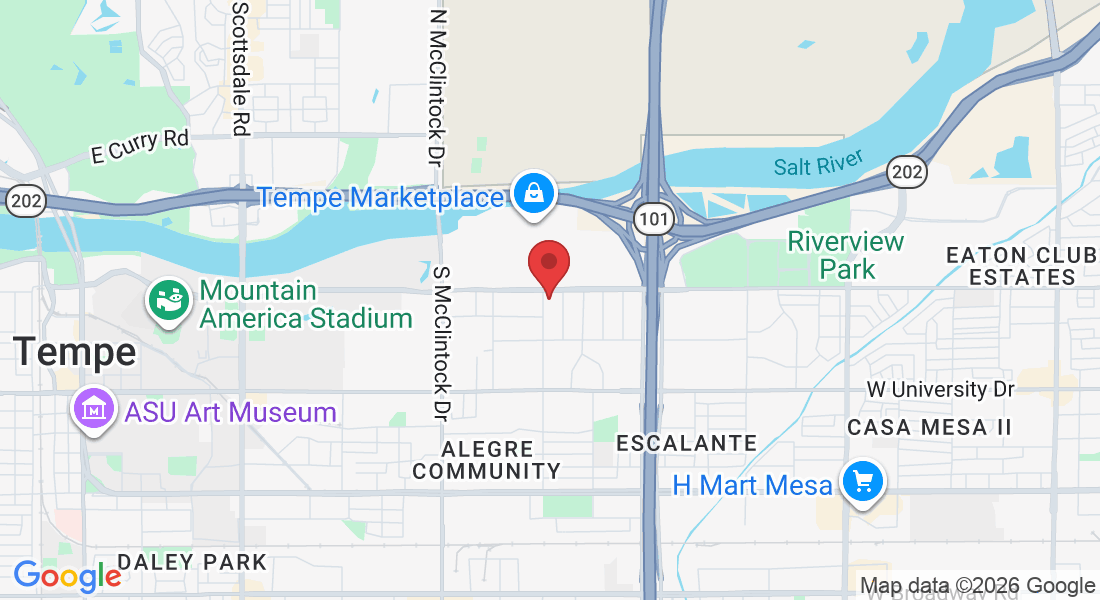
Just south of Tempe Marketplace
at the Junction of the 101 & 202 Freeways

© Copyright 2026 All Rights Reserved.
Last Updated: [DATE]


