
LIMITED RANGE OF MOTION
Being able to move freely is a luxury that many of us tend to take for granted until it is gone. Range of motion means how far a joint or body part can move in each direction.
You use range of motion every time you:
Turn your head
Reach over your head
Bend in any direction
Lift your arm
Squat down
Cross your legs
Walk up stairs
Limited range of motion means a joint or body part cannot move as far, as freely or as easily as it normally should. The movement may stop because of pain, swelling, muscle tightness, joint stiffness or a problem inside or around the joint.
What Does Limited Range of Motion Feel Like?
Limited movement may feel like:
Stiffness when you first get up.
A tight pulling feeling.
Pain at the end of a movement.
A joint that feels stuck or blocked.
Trouble turning or bending.
A hard stop when you try to move farther.
Grinding, clicking or catching.
One side moving better than the other.
Difficulty reaching, walking, dressing or exercising.
You may notice that you have started to change how you move.
For example:
You may turn your whole body instead of your neck when changing lanes in your car.
You may avoid using one arm. You may not be able to wash your hair anymore.
You may take shorter steps or use your stronger side to do most of the work, like always using the same foot to step the stairs.
These changes may seem small at first. Over time, they can place extra stress on other joints and muscles, which causes all of those structures to age and break down too fast.
Common Causes of Limited Range of Motion
Your body may limit movement to protect an area that hurts. This is useful for a short time after an injury. The problem occurs when the body continues guarding the area after the immediate danger has passed.
2. Muscle Tightness
Tight or overworked muscles may make a joint difficult to move. Muscles can become tight from repetitive work, prolonged sitting, poor movement habits, stress, injury or lack of activity.
3. Joint Stiffness
A joint may become stiff when it is not moving normally. This may happen after an injury, during a period of rest or when the joint has not been taken through its full movement for a long time. For example: after laying in bed from being sick.
4. Swelling and Inflammation
Swelling takes up space around a joint and can make movement painful or difficult. Inflammation may develop after an injury, infection, overuse or with conditions such as arthritis. Arthritis commonly causes joint pain, swelling and stiffness.
5. Sprains, Strains and Other Injuries
Muscles, tendons and ligaments can be injured by a fall, accident, workout or sudden movement. Fractures, dislocations and joint injuries can also reduce movement.
6. Arthritis
Arthritis can make a joint painful, swollen and stiff. With osteoarthritis, the smooth cartilage covering the ends of the bones slowly wears down. This can make movement rougher and more painful.
7. Scar Tissue
Scar tissue may form after an injury, surgery or a long period of limited movement. This tissue may not stretch as easily as healthy tissue. Severe tightening of muscles, tendons, ligaments or the joint capsule is sometimes called a "contracture".
8. Poor Posture and Repetitive Positions
Sitting, driving, looking down or repeating the same task for hours can train the body to become very good at one position and less capable in other positions. The body adapts to what you repeatedly ask it to do. For example: sitting at the desk slumped over or looking down at your phone doom scrolling for minutes and hours on end, you will eventually start to bend over permanently. You can see it happening in real time in any store in America, look around at people's posture.
9. Nerve or Neurological Problems
Nerve injuries and certain conditions involving the brain, spinal cord or muscles can change strength, muscle tone and movement. These cases require an appropriate medical evaluation.
10. Lack of Movement
Joints are designed to move. Period. Full stop.
Is Your Body Getting Older, or Is Something Actually Limiting Your Movement?
A small change in flexibility can happen over time, but a growing loss of movement should not automatically be blamed on age. Your range of motion may be limited by tight muscles, swelling, pain, an old injury, arthritis or a joint that is not moving well.
Age is not a complete diagnosis. Two people of the same age can move very differently. Their daily activity, injuries, strength, health and movement habits may be very different.
Pay attention when:
One side moves less than the other
The loss of motion is getting worse
Movement causes pain
The joint feels stuck or unstable
The problem is changing how you walk or work
You do not need to wait until you can barely move before you investigate the problem.
Why Is My Joint So Stiff After Sitting or Sleeping?
Your body often becomes stiff when it stays in one position for too long. Movement circulates joint fluid and keeps muscles and connective tissues active. Think of movement like "greasing the hinges" when a door gets squeaky.
Morning stiffness may also be connected to arthritis or inflammation. Arthritis can commonly causes pain and stiffness, and some forms produce more noticeable morning symptoms.
Stiffness deserves more attention when it:
Lasts a long time.
Returns every day.
Keeps getting worse.
Comes with swelling, warmth or redness.
Stops you from doing normal tasks.
Your body should not need half the day to warm up enough to become usable. From a normal hormonal perspective, you should be warmed up and ready to go with in 30-45 minutes after getting out of bed each morning.
Can Limited Range of Motion Be Improved?
In many cases, yes.
The right solution depends on what is stopping the movement: A tight muscle may need a different approach than an inflamed joint, torn ligament, fracture or arthritic joint. That is why the first job is not to force the joint farther. The first job is to identify the barrier and why the body is putting it there.
Depending on the cause, care may include:
Gentle movement
Physical therapy
Chiropractic care
Activity changes
Treatment for inflammation or disease
Medical testing or imaging
Movement often improves when pain is reduced, joint function is improved and the muscles around the area become stronger. This is why chiropractic adjustments are so helpful to restricted, tight, stiff joints.
Should I Stretch a Joint That Will Not Move?
Stretching may help when muscles are tight, but more stretching is not always the answer.
Do not force a joint that feels:
Locked.
Unstable.
Sharply painful.
Hot or swollen.
Recently injured.
You can irritate an injured or inflamed area by pushing too hard.
Gentle movement should usually feel controlled. You may feel mild tension, but you should not feel sharp pain, sudden catching or the sense that something is tearing.
When Does Limited Range of Motion Need Professional Attention?
Schedule an evaluation when the problem:
Does not improve.
Keeps returning.
Is getting worse.
Affects your work, sleep or exercise.
Changes how you walk or use your body.
Comes with weakness or numbness.
Started after an injury.
Makes the joint feel unstable.
Do not wait.
How Chiropractic Care May Help
Add a Title Here
Chiropractic care may help when limited movement is connected to joint stiffness, muscle tension, pain, poor movement patterns or physical compensation.
At Active Family Chiropractic AZ, we do not simply ask, “Where are you tight?”
We look at:
Which movement is limited?
Where the movement should be coming from?
Whether pain is blocking the movement?
Which muscles are weak or overworking?
Whether another part of your body is compensating?
How the restriction affects your daily life?
A stiff area is not always the real problem. Sometimes the painful area is working too hard because another area is not doing its job. That is why chasing the sore spot may bring temporary relief without solving the full problem.
So the enemy is not simply stiffness. The enemy is compensation.
Our Alpha 5 Phase System is designed to move you beyond temporary relief.
Relieve
Reduce pain, irritation and protective muscle tension.
Realign
Improve joint movement and reduce the stress caused by poor mechanics.
Rebuild
Strengthen the muscles that support and control the area.
Retrain
Teach your body how to use the restored movement during real life activities.
Reclaim
Return to the work, exercise and activities that matter to you.
If you are ready to RECLAIM your Range of Motion, REQUEST AN APPOINTMENT below:
QUICK LINKS
office hours
Mon: 7:00 AM - 2:00 PM
Tue: 2:30 PM - 6:00 PM
Wed: 7:00 AM - 2:00 PM
Thu: 7:00 AM - 2:00 PM
Sat: Appointment only
Sun: Closed
129 S Smith Road #101 Tempe, AZ 85288
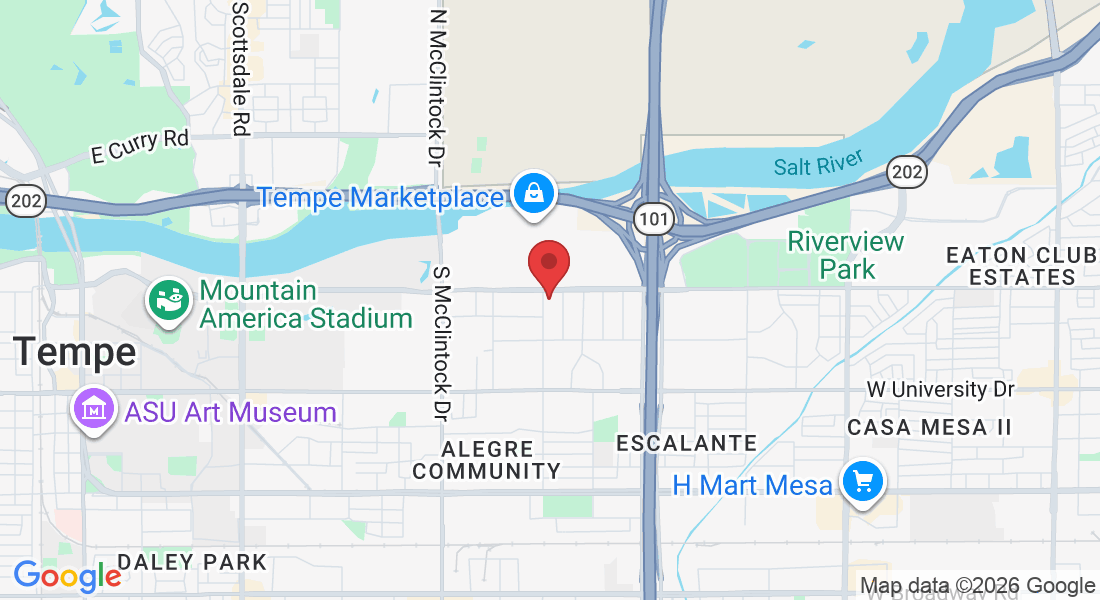
Just south of Tempe Marketplace
at the Junction of the 101 & 202 Freeways

© Copyright 2026 All Rights Reserved.
Last Updated: [DATE]


